
Vintage Superermarket Photos has two dozen photos of grocery stores from the past. The photos looks like they’re from the 50s and 60s. It looks familiar to me.
Vintage Superermarket Photos has two dozen photos of grocery stores from the past. The photos looks like they’re from the 50s and 60s. It looks familiar to me.
The Wall Street Journal had a story in the Friday print edition Detroit Auto Makers Try Some New Tricks on how difficult it is for domestic automakers are having trouble convincing new car buyers despite improvements in quality and design. The chart below is a portion of a chart in the paper:
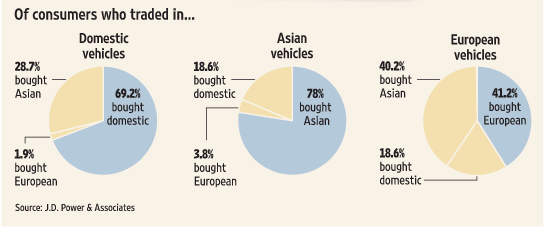
This shows that 69 percent of owners of a domestic vehicle bought another domestic vehicle. What caught my eye was how low the percentage of owners of European vehicles who bought another European vehicle — 41 percent.
Haha.nu explains how to take maple leaves from the fall and turn them into roses. I don’t know…maple leaves seem pretty enough as is.

Read: “The Human Factor” by Graham Greene — Rather than a last-minute mad dashes to save the world, “The Human Factor” looks at the lives of a settled agent, his wife and her child and the moral issues the agent faces. In his mind he’s not betraying his country, but in the end we see that he saw only part of the picture. His bosses and others were playing different games. I liked the book, but it helps to have an appreciation of life during the Cold War. “Human Factor” entry in Wikipedia.
A day after the story about Eons.com cutting staff, (Maybe baby boomers don’t want social networking), is a piece in today’s NY Times: New Social Sites Cater to People of a Certain Age. Besides eons, there are others, including Rezoom, Multiply, Maya’s Mom, Boomj, and Boomertown.
Social networking has so far focused mainly on businesspeople and young people because they are tech-savvy and are treasured by Madison Avenue.
But there are 78 million boomers — roughly three times the number of teenagers — and most of them are Internet users who learned computer skills in the workplace. Indeed, the number of Internet users who are older than 55 is roughly the same as those who are aged 18 to 34, according to Nielsen/NetRatings, a market research firm.
Eons.com, which marketed itself as the social networking site for baby boomers, is cutting is laying off about a third of its staff and plans a restructuring, according to Boston Business Journal. From January: MySpace for boomers
Mark Glaser, writing in MediaShift, takes companies such as Interactive Advertising, Nielsen, and others, over the wide range of methods for measuring traffic and the flaws associated with the varied methods. Part of the issue is what do you want to measure: page views, unique visitors, time on site, all of which can be manipulated to make numbers better. How do you measure: IP address, cookies (making users like me 3 or 4 unique visitors per day). He makes a mention of a new company Quantcast, which has different ways to measure.
The deciding factor will be which measurement the advertisers trust. Glaser’s piece was in two parts (1, 2 )
NY Times: Twin Cities Editor Planning Online Daily. A non-profit news organization is starting in Minneapolis/St. Paul staff with top former executives from daily metro papers.
Non-profit status, would let readers support it as the local NPR TV and radio stations are supported. It would also let contributors write off contributions on taxes. Article also mentions Voice of San Diego, a 2 1/2 year-old group. Twin Cities group is looking to raise $850,000. Voice of San Diego has nine full-time employees and an annual operating budget of $560,000.
Compared with metro dailies, a staff of nine is minuscule.
Minneapolis/St. Paul Business Journal also had story Friday: Former Strib staffer to launch online newspaper
Smashingmagazine: Data Visualization: Modern Approaches. Especially the tools and services section at the end with timelines, pie charts and histograms and links to Charts and Diagrams Tools.
The beginning of this book was slow with the personal essay, but it improved once Keegan discussed specifics.