Finished: Rework and other books

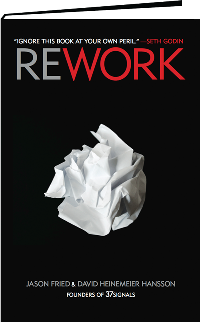
Cover of "Rework"I’ve finished several books in the past week. Some, such as Rework were quick reads with short paragraphs.

Another book, Arab and Jew: Wounded Spirits in a Promised Landby David K. Shipler, was an audio book I finished thanks to a long drives recently. It’s a good view of the twists, knots and roadblocks that prevents peaceful relations. But the book still gives hope — but it will take more time.

“Rework” is for action-minded business people who prefer action to meetings. It might convince someone to start, which is the largest obstacle to many people’s dreams. The book reminded me of Seth Godin’s free e-book “What Matters Now”, which can be downloaded from his blog.

Read: The Girl with the Dragon Tatoo

Cover of current paperback "The Girl with the Dragon Tattoo"

Cover of current paperback

Finished “Girl with the Dragon Tatoo” by Stieg Larrson finally. I started reading it in June. It was OK and more than once I thought it was talking a lot more time to develop than it needed to be.

And then I saw “The Girl Who Fixed the Umlaut” in The New Yorker by Nora Ephron, which was a very funny version of how I felt.  I really enjoyed this line: Salander opened the door a crack and spent several paragraphs trying to decide whether to let Blomkvist in.

Increasing transparency in the bond market

Micheal Lewis "The Big Short"One interesting conclusion in reading Micheal Lewis’ “The Big Short: Inside the Doomsday Machine” is that bonds markets should be more transparent so that both buyers and sellers can have better ideas on what bond prices are.

Knowledge of prices is a key tenant in pure capitalism, and one supplier like to avoid. Have an object become a commodity moves into a low-margin business, because a competitor’s product can easily be substituted.  Buyers are big winners in transparent markets.

The equity markets has become more transparent and open in recent decades as discount brokers grew. Present a choice, buyer happily dropped the “research” and personalized advice that full-service brokers offered. Maybe it was the difference in commissions, and the ease that technologies, such as telephone trading and later internet trading.

Lewis maintained in his book that one reason Wall Street firms moved to quickly in the sub-prime and CDO market was the commissions on selling these products was so much higher than the ever-shrinking commissions in the equity markets.

A public market similar to the stock market is growing in more areas of the bond market, especially in the public sector, but it’s still a long way from being as accessible as equity markets.

Related:

Journalism startups: it’s a business, not a job

Reflections of a Newsosaur: Journalists running start-ups face tall odds

After talking to one enterprising journalist after another, I have found almost uniformly that they are making the mistake that has proven to be the downfall of many an entrepreneur: Instead of trying to build a business, they are trying to give themselves the job they always wanted.

There’ a big difference between running a business and working a job that is the business.

One of the best ways to understand the difference is explained in Michael Gerber’s E-Myth, which is now E-Myth Reviseted: Why Most Small Businesses Don’t Work and What to Do About It. It’s the best book I’ve read on how successful business owners manage and grow their businesses compare with being very good at working in the business. You can read the first chapter of the E-Myth Revisited.

For journalism start-ups, Newsosaur’s Alan Mutter nails the argument with:

While journalists at news start-ups think nothing of routinely devoting more than a dozen hours a day to running down stories and tweaking their websites, the pace typically leaves them with neither the time nor the energy to think about such key success factors as building audience and developing a healthy financial basis for their endeavors.

It’s not enough to just have traffic. A entrepreneurial journalist needs to think revenue, controlling expenses and growth. A revenue detail many startups overlook is the revenue being earned on page views. It’s a standard of looking at revenue.

Earlier this year, Felix Salmon, writing in Blogonomics: Revenue per page, and Henry Blodgett debated the importance of revenue per page. Salmon’s best quote was:

This is one area where I think that Henry could take a leaf out of Nick Denton’s book, and refuse to run deeply-discounted ads. Doing that helps to improve the value of the brand among advertisers, and it also creates interesting opportunities for rewarding staff.

See the spat between Salmon and Blodgett, retold in the AtlanticWire.
Lisey’s Story by Stephen King

Lisey's_story I stopped reading Lisey’s Story by Stephen King after 150 pages. Maybe it was the story, maybe it was me, but I couldn’t keep enough interest in the book to push on.

I’ve enjoyed other King novels, but I also have a rule that if I can’t stay interested in the book after the first 50 pages, I’ll put it down.

This book was much better in the first 50 pages, but it began to lose my interest after the first 100. Maybe I’ll try it again later.

Other books I read in 2009

In no particular order and not previously mentioned …

The book I enjoyed most was The Coldest Winter. The book that made me laugh the most was Boomsday.

I also listened to Modern Scholar audio books, thanks to the Public Library of Charlotte and Mecklenburg County. Those audio books included:

  • From Here to Infinity: an Exploration of Science Fiction Literature by Michael D.C. Drout
  • Christianity at the Crossroads: the Reformations of the Sixteenth and Seventeenth Centuries by by Thomas F. Madden
  • Way With Words: Writing, Rhetoric, and the Art of Persuasion by Michael D.C. Drout
  • History of the English Language by Michael D.C. Drout

The best of this was History of the English Language.

What the Dog Saw — another great read from Gladwell

What The Dog Saw by Malcolm Gladwell

What The Dog Saw by Malcolm Gladwell

“What the Dog Saw: And Other Adventures” is collection of Malcolm Gladwell‘s New Yorker pieces and hits squarely on a quality I love in books — it makes me more curious and questions what I think I know. Those qualities are things I love about journalism and non-fiction writing.

It covers everything from the cloud of information prior to the 9/11 attacks and Enron to how to choose NFL quarterbacks.

Gladwell’s books (I read Outliers earlier this year and Tipping Point long ago.) are easy to read, making a book to read while traveling or waiting for an appointment. This latest book now makes me want to read SuperFreakonomics by Stephen D. Levitt and Stephen J. Dubner.

Oppenheimer’s life is an interesting look at the power of government


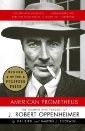
American Prometheus

American Prometheus: The Triumph and Tragedy of J. Robert Oppenheimer– by Kai Bird and Martin J. Sherwin is an interesting look at Oppenheimer who was practically deified after World War II only to end up being viewed with suspicion and distrust by that same government in about 10 years.

Oppenheimer was caught by two major movements in the U.S.: the move to more liberal ideas in the 1930s in response to the Great Depression and then the swing in the 1950s to being fearful of those same liberal ideas. There was also the confusion in the 1930s of the true nature of the Stalin, which many liberals ignored and then the fear that anyone who was on back then might still be one in the 1950s.

The book won the Pulitzer Prize.