 > Priceless: How I Went Undercover to Rescue the World’s Stolen Treasures by Robert K. Wittman, John Shiffman. One of the nice things about browsing through a library. You see a book, pick it up and find yourself hooked. I enjoyed the book and learning about the economics of art thefts.
Category Archives: Books
Books read in Dec. 2011
 Boomerang: Travels in the New Third World by Michael Lewis. Problems in Greece, Ireland, part of the United States. Best quote in book — Kyle Bass on investment advice for his mom? “Guns and gold.”
Bossypants by Tina Fey — I was looking for something funny and light. I enjoyed the book
Books read in Nov. 2011
 At Home: A Short History of Private Life by Bill Bryson. I enjoy Bryson. I’ve enjoyed several of his books. This ranges from why there button on the sleeves of men’s coats to child labor laws. Good book for reading during distracting times.
Other Bryson books I’ve read:
- A short history of nearly everything
- Shakespeare: The World as Stage
- A Walk in the Woods: Rediscovering America on the Appalachian Trail
- In a Sunburned Country
- The Life and Times of the Thunderbolt Kid: A Memoir
- I’m a Stranger Here Myself: Notes on Returning to America After 20 Years Away
The Devil in the White City: Murder, Magic, and Madness at the Fair that Changed America by Erik Larson. I enjoyed the history of the Chicago World’s Fair and plan to read Larson’s latest book “In the Garden of Beasts: Love, Terror, and an American Family in Hitler’s Berlin”.
Plugged: A Novel by Eoin Colfer. This was his first book for “adults”, though I enjoyed the Artemis Fowl books even though they were written for a younger audience.
Books read Oct. 2011
 > Too Big to Fail by Andrew Ross Sorkin — The play-by-play of the effort to rescue Merrill Lynch and other Wall Street firms. Over time, it’s not clear how much we’ve learned from that economic meltdown. It still seems it is too easy for it to happen again.
Books read in Sept. 2011
 > For the Love of Physics: From the End of the Rainbow to the Edge Of Time – A Journey Through the Wonders of Physics by Walter Lewin, Warren Goldstein. I enjoy science books. It I had not chosen business and economics, I would have been intrested in science. A good books for general-interest readers. Reminded me of Richard Feynman’s books
> Eats, Shoots & Leaves: The Zero Tolerance Approach to Punctuation by by Lynne Truss. It was a good read, but my favorite is “Elements of Style” by by William Strunk, Jr. and E. B. White
Books read in August 2011
 > Legacy of Ashes: The History of the CIA by Tim Weiner. The old saying is that we hear of the CIA’s failures, but not of their successes. Apparently there were that many successes after all.
> The Thank-You Economy by Gary Vaynerchuk. I read part of this book and listened to part of it. It’s best as an audio book to hear Vaynerchuk’s pacing and emphasis.
Books read in July 2011
 Legacy of Honor: The Values and Influence of America’s Eagle Scouts by Alvin Townley. A good book to read at a Boy Scout summer camp in July. The book interviews men across the country who look back on what and how earning the Eagle rank has helped them.
I hope soon to be the parent of an Eagle and I hope the time and effort has been worth it. One thing about the Eagle award is that it is earned by the boy. There are a lots of parents and scoutmasters pushing, but it’s the boy’s award.
Even in the Scouting organization, only about 2 percent of boys who have even been in Scouting earn Eagle. I’ve been a Scout leader in a troop where the percentage is higher. The current group of boys working on their Eagle are boys I’ve known since they were in Tiger Scouts.
Red Gold by Alan Furst — a World War II mystery. This wasn’t Furst’s first book, but I liked the book enough to want to ready his first book.
Books read in June 2011
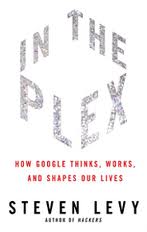 In The Plex: How Google Thinks, Works, and Shapes Our Lives by Stephen Levy. Google is one of the key disruptive companies of this past decade. It’s more than a history of Google, it also helps explain the company’s core values as compared with many of its earlier competitors. One of the best stories was about the people with AltaVista, being worried that Google’s results were so good that users would not spend enough time looking at the ads that supported AltaVista. Remember AltaVista and others that are now part of the Search Engine Graveyard.
Levy also wrote How Google’s Algorithm Rules the Web for Wired magazine in 2010j, which was passed around in our office to help us understand Google.
One Second After by William R. Forstchen — An EMP pulse chance life forever in the United States with the focus of the book being Black Mountain, N.C., a favorite place for me. The books is sobering and unsettling and is a book that people are passing along to others. See Forstchen’s web site at One Second After. Many years ago I enjoyed another post-apocalyptic tale Lucifer’s Hammer by Larry Niven and Jeffy Pournelle
Act of Will by A.J. Hartley — Hartley lives in Charlotte, but the book is set in a fictional world in the middle ages. I liked that the book was less than 340 pages and not the large volumes I see in similar quest stories. This was my first book by Hartley, but I’d like to read more.
Finding first books by authors
Checking out two new authors at the library from the staff recommendation sections. Found two I like and then went to find the earliest books I could by the author. I like starting with earlier books, even if it’s not part of a series.
First-time authors currently reading: Alan Furst and Peter Steiner.
Posted from beneubanks’s posterous
Books read in May 2011
 The Emperor of All Maladies: A Biography of Cancer by Siddhartha Mukherjee — Helps explain why there is no single war on cancer, because cancer is not one thing. And making the battle even harder is that cancer evolves. Cancer evolves making promising cures ineffective. It is the dark side of life and will remain a part of our lives, because it is created from our lives. The book won the Pulitzer Prize for general non-fiction in 2011.
206 Bones by Kathy Reichs — Still searching for writers similar to Michael Crichton, one of may favorite authors. This was my first book by Reichs, and the writing style reminded of author Robert B. Parker.